
Armenia’s defeat in the 2020 Artsakh War was a collective failure of all state bodies and institutions. The new Armenian government must construct a foreign policy doctrine defined by “strategic engagement.”
After its victory in the 2020 Artsakh War, Azerbaijan started massive restoration projects in the seven conquered regions of the Republic of Artsakh. These projects will undoubtedly impact Armenia.
Armenian citizens are heading to the polls on June 20 in an early parliamentary election. Over 20 parties and alliances of parties are running. Here is the foreign policy section of the programs of seven of those political forces in order of their position on the ballot.
Daniel Tahmazyan explores different perceptions of Time as it relates to the State, and the role they play in long-term vs. short-term planning.
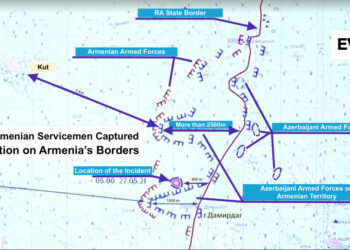
More than two weeks after Azerbaijani Armed Forces crossed into Armenian territory, six Armenian soldiers were surrounded and captured, escalating the already tense situation in Armenia’s border regions.
Armenia’s security infrastructure requires a robust defense doctrine, expansive reforms, rearticulation of geopolitical and geostrategic realities, closing the gap in power disparity with regional actors and competent institutional structures.
Nine days after Azerbaijani Armed Forces crossed into Armenian territory in the Syunik and Gegharkunik regions, the standoff continues. The absence of a resolution and the potential of a military confrontation has the people of Armenia on edge. Here is a timeline of events.
A day after the trilateral agreement ending the 2020 Artsakh War was signed, the first contingents of Russian peacekeepers were deployed. Six months in, clarifications regarding the size, mandate and mission of the peacekeepers are still not clear.
Armenia is at the wrong end of global cyber security indexes. The lack of a comprehensive cyber security national policy makes the country's network and information systems vulnerable. The 2020 Artsakh War clearly proved this.
Azerbaijan increased its military spending by 17% in 2020; this was among the largest annual increases in Eastern Europe and Eurasia. Ani Avetisyan breaks down the numbers of the military expenditures of both Armenia and Azerbaijan.
EVN Report’s mission is to empower Armenia, inspire the diaspora and inform the world through sound, credible and fact-based reporting and commentary. Our goal is to increase public trust in the media. EVN Report is the media arm of EVN News Foundation registered in the Republic of Armenia in 2017.
SUPPORT INDEPENDANT JOURNALISM