
Visiting one post-Soviet state, you can then recognize it in all others – the similar patterns of urban planning and the identical buildings, structures, roads, pipes, wires, tiles, etc. However, an outsider delving inside under the extreme familiarity of the material environment finds an extreme “strangeness” of social interactions and practices. The “Outside In” series is about emplaced paradoxes and nuances. It spotlights the mundane in Armenia’s peripheral locations, where the seemingly unspectacular encounters with people and things allowing us to capture the unique features of the territory.
Listen to the article
Outside In
Essay 9
Եւ ասաց Աստուած. Եղիցի լոյս: Եւ եղեւ լոյս:
Եւ ետես Աստուած զլոյսն զի բարի է. եւ մեկնեաց Աստուած ի մէջ լուսոյն եւ ի մէջ խաւարին:
And God said, Let there be light, and there was light.
And God saw the light, that [it was] good, and God divided the light from the darkness.
(Genesis 1:3–4. King James Bible)
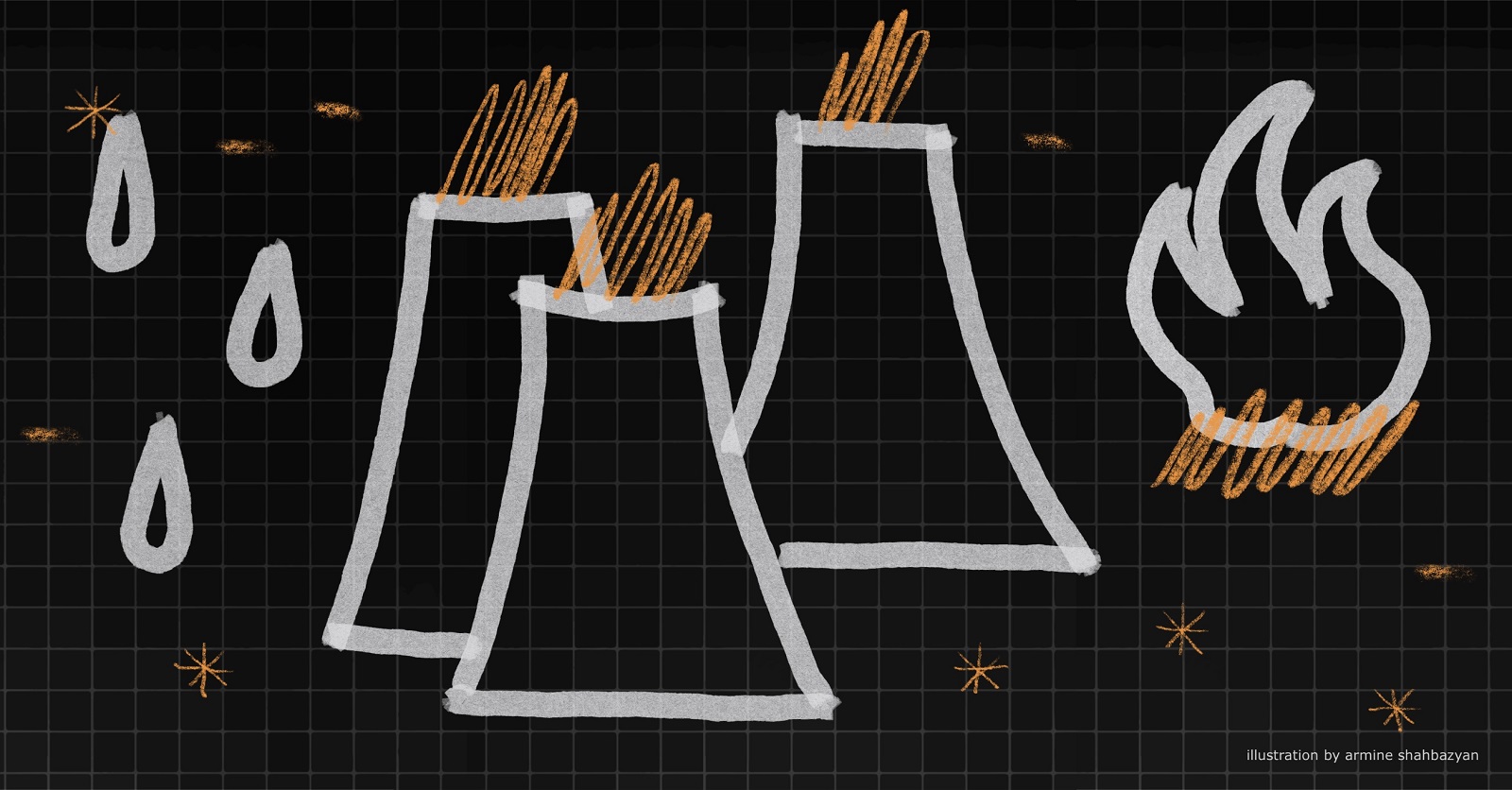
In 2016, during my first trip to Armenia, I visited the History Museum in Yerevan, located in the heart of the capital on Republic square. Passing through a rich collection of ancient, medieval, and modern items, I finally reached the last hall. It hosted a temporary exhibition dedicated to the early 1990s in Armenia. This was a period when the country faced a severe energy crisis that is referred to as the “dark years” or the “dark and cold years” – Mut tariner, Mut u tsurt tariner [Մութ տարիներ, Մութ ու ցուրտ տարիներ].
The Metsamor nuclear power plant, which provided a significant portion of the country’s electricity, ceased operations in 1989 due to the Spitak earthquake. This left Armenia heavily reliant on external energy resources, particularly gas. However, the First Nagorno-Karabakh war resulted in Azerbaijan blocking the transit gas supply to Armenia. Furthermore, the gas pipeline from Russia, which ran through Georgia, was subjected to repeated acts of terrorism, sabotage, and theft. In January 1992, Armenia began experiencing daily rolling blackouts. By November of the same year, electricity was supplied to apartments in Yerevan for only one hour per day, and even this was not guaranteed. Other cities and towns could go weeks without electricity. The energy crisis lasted until October 1995. The situation improved when the Metsamor nuclear power plant was restarted following the ceasefire agreement with Azerbaijan. Gas supplies from Russia via Georgia were fully resumed, and a new gas pipeline to Iran was put into operation.
The black and white photos displayed on the white walls of the History Museum –– a plain, sterile arrangement –– was a powerful expression of the hardship experienced by the Armenians during the “dark years”. The exhibition’s contents were limited, which is understandable. People were more preoccupied with survival than documentation. The photos depicted Armenia as a country of darkness, cold, silence, and shortages. Telephones and radios did not work, almost all public transport had ceased, and most schools and hospitals were shut down. Only a few factories remained operational, leaving an estimated two-thirds of the population jobless. Deprived of light, heat, and hot running water, Armenians lived by candlelight and cooked over small flames of metal wood-burning stoves. Everything that could be traded was traded for fuel and food. In the larger cities, parks were stripped of trees in a desperate search for firewood. These themes were recurrent at the exhibition.
The exhibition left a lasting impression on me. I was astonished by what I saw and learned. I was equally surprised by my own ignorance and how little is known about these events outside of Armenian society. The post-Soviet 1990s in Central Russia, where I grew up, were marked by hunger, poverty, various shortages, and instability. Despite the challenges, centralized urban infrastructures remained functional. My parents, who worked at a nuclear power plant, would joke that instead of a salary, which could be late for months, they received an unlimited supply of electricity. Armenia, on the other hand, suffered a whole new level of privation. According to memoirs and oral histories, the “dark years” were a frightening and confusing experience, with a degree of inscrutability. They left a profound and lasting impact on society, the economy, and the lived environment. Thirty years on, failing infrastructures and reoccurring blackouts in small Armenian towns continue to demand adaptability and creative thinking from residents. They also unearth uneasy memories lurking in the corners of consciousness. Yet, these hardships also have a sobering effect, whereby one learns to be happy with small things.
One February morning in 2023, two months into my fieldwork in a small Armenian town, I woke up shivering. The electricity had gone out again during the night. Without electricity, there was no light, heating, or hot water, as my apartment had an electric gas boiler, a Baxi. In my previous fieldwork apartment, there was only one space heater that heated an area of approximately two meters around itself. So a Baxi was a huge upgrade, but it doesn’t run on thin air.
There was no light in the entire town for the third time that week. Some attributed it to the windy weather, while others blamed it on stolen copper wiring. The power was supposed to come back, but hell if anyone knew when. As the sky grew darker, so did the room. Muffled in my sleeping bag, I stood up and lit a cluster of thick white candles. I could hear the gas generators of my neighbors, accustomed to the blackouts. Monotonously humming in the distance, the generators provided them with the illumination and heat I so desired.
“And it’s so damn cold, yes it’s so damn cold.
I know it’s hard to believe.
But I haven’t been warm for a week”, the 1980s song about an American spy in Moscow “Moonlight and vodka” played in my head.
“There is no bad weather, only bad clothing,” goes a popular saying. I put on gloves and layers of clothing –– black thermals and a turtleneck, long snowboarding socks, a beige alpaca sweater from my honeymoon in Chile in 2011, a down vest, and hiking pants. I felt better, though somewhat like the Michelin man from the car tyre advertisement.
Waiting for the light, I learnt not to be afraid of the dark. Apart from my own demons, nothing could harm me. The darkness was not sinister, but rather liberating from expectations of acting “decent” and “proper,” from prescribed norms and roles. The warm candlelight even seemed romantic. Akhtamar, the ten-year Ararat brandy that flowed like holy water through the veins, was a midday luxury. Moving slowly around the apartment as if in hibernation, I made some coffee with cinnamon, as always spilling brown liquid all over the stove. It seems I will never learn the Armenian magic of taking it off the fire in time. Munching on a sandwich and holding the pleasantly warm mug, I went out to the balcony to smoke and observe the melancholic, sleepy town. A plastic bag was stuck in tree branches, a dog ran on the street, and the improvised benches in front of the garages, usually occupied by men playing cards, were empty. The noise from the generators grew louder. I gazed at the dim light that they provided to some homes, while in others, like in my apartment, I could see only hints of the flickering candle flames inside.
Suddenly, a bulb in the kitchen flashed with a bright, warm light. I heard the shrill beep of my UPS [uninterruptible power supply] turning on. The neighbors’ children below joyfully shouted, “light, light”—luys, luys [լույս]. Indeed, a phrase captured by journalist Wendell Steavenson featured in her book “Stories I Stole from Georgia” about life in Georgia in the late 1990s rang true: “In England, you have electricity. But you do not have the happiness that comes when the electricity comes”. Like Prometheus, or perhaps a more context-appropriate metaphor, Gregory the Illuminator, an anonymous electrician gifted us back light and a sense of civilization. It was a magical and sacred moment. I rejoiced at the thought of a hot shower. Smiling like the Cheshire Cat, I swiftly danced my way to the bathroom before, God forbid, the light went out again.
Author’s note: The text is partially drawing on data collected with the financial support from the European Research Council (ERC) under the European Union’s Horizon 2020 research and innovation programme (grant agreement no. 865976). I wish to express deep gratitude to my colleague and friend Sarhat Petrosyan, whose support, advice, and the fact that he taught me to drink cognac were lifesaving during fieldwork.

Maria Gunko is a DPhil Candidate in Migration Studies, Hill Foundation Scholar at the School of Anthropology and Museum Ethnography University of Oxford. Since 2023, she has joined Yerevan State University as a Visiting Professor. Maria holds an MSc and Kandidat Nauk (Russian post-graduate degree) in Human Geography.
Maria’s research interests lie in the intersection of urban studies and social anthropology, including ethnography of the state, infrastructures, and urban decay with a geographical focus on Eastern Europe and the Southern Caucasus. She is the co-editor of one monograph, author of over thirty scientific articles and op-eds.
Outside In
Essay 1
A Place on the Edge of Armenia’s Urban Geography
Once an agricultural settlement, tidily inscribed into the picturesque mountain landscape, Dastakert was remade by the Soviet state into a site of copper-molybdenum extractivism. That project failed. What happened to the city?
Read moreOutside In
Essay 2
The (Un)Fairytale of Siranush
Following the story of Dastakert, Armenia’s smallest city, this next essay in the “Outside In” series looks behind the veil of yet another small Armenian city and offers a glimpse into the lives of its “void dwellers”, namely Siranush.
Read moreOutside In
Essay 3
After Us
The dissolution of the Soviet Union created vast areas of abandonment and no-go zones that froze in time. In this next essay in the “Outside In” series, Maria Gunko writes that until the material relics of the Soviet Union disappear for good, we are deemed to revisit them, provoking thoughts about what societies value, how they evolve and what they leave behind.
Read moreOutside In
Essay 4
The Female Fix
According to traditional gendered divisions of household labor, repairs fall to the man of the house and his ability to perform such work is very much linked to being seen as a “proper” man. But what about the women? Maria Gunko’s fascinating journey into the realm of the “female fix”.
Read moreOutside In
Essay 5
When Patriarchy and Imperialism Collide: Some Questions of Positionality
In trying to understand her assumptions of her position as a researcher, and the spaces she could access, Maria Gunko uncovered that it was not her ethnicity that informed how she was perceived on the field site, but rather the explosive mixture of her gender and ethnicity.
Read moreOutside In
Essay 6
A Short Colorful Lyrical Digression
In commemoration of renowned Armenian poet Yeghishe Charents, Maria Gunko delves into his colorful universe to see how it captures the essence of Armenia's landscapes and geography, drawing parallels with her perceptions.
Read moreOutside In
Essay 7
The Shifter Under the Monastery
The surroundings of the Kobayr Monastery are a contrast between the eternal and the fleeting, the essence and the image, serenity and mundane chaos. Maria Gunko’s story is a patchwork of two places and one character who seemingly dwells between them, making a life from what’s available.
Read more