
Postmortem of a Catastrophe
Will the formation of a Truth Commission on the 2020 Artsakh War make it possible to rectify persistent and systemic errors that led to such military and geopolitical failures?

Will the formation of a Truth Commission on the 2020 Artsakh War make it possible to rectify persistent and systemic errors that led to such military and geopolitical failures?
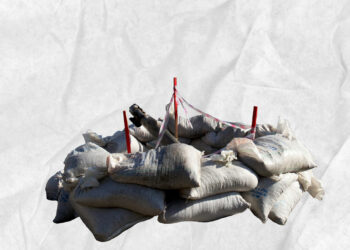
The narrow geopolitical framework of the three-decade-old Karabakh conflict is now threatening to become a Eurasian nightmare: Turkey's involvement has sensationalized the war, Iran’s unease has reinforced the confusion, while Russia's perceived passiveness has created much regional anxiety.
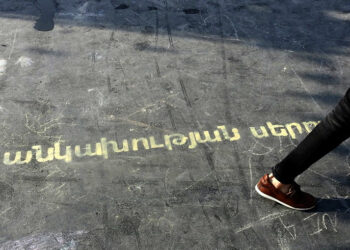
On this day of independence, the Armenian people celebrate their defiance of history and injustice. Every September 21, Armenians celebrate their will-to-power, their indestructible will to Struggle.
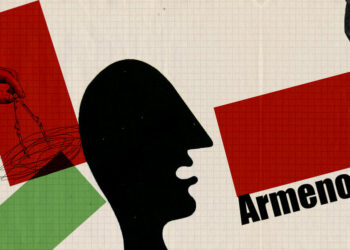
The contours of Armenophobia presuppose the dehumanization of an entire people, where hatred and aversion towards an Armenian is embedded in Azerbaijan’s political culture, writes Nerses Kopalyan.

That the same people who made a mockery of democracy are now lamenting an imaginary backsliding, is intellectually insulting to the Armenian citizen, writes Nerses Kopalyan.
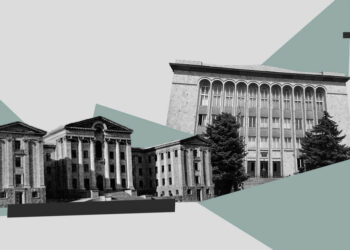
During an extraordinary session, Armenia’s National Assembly initiated and unanimously approved a set of Constitutional amendments to address the crisis of political and institutional legitimacy of the Constitutional Court.

Gagik Tsarukyan is a remnant of the previous system. The era of oligarchs is over, and Tsarukyan must make his peace with that. Armenia is no longer a country for corrupt old men, writes Dr. Nerses Kopalyan.

The Armenian government has initiated a broad set of cases against the oligarchs and Robber Barons of the former regime composed of the upper echelon of the previous-pyramid hierarchy. Nerses Kopalyan looks at a number of high-profile cases.
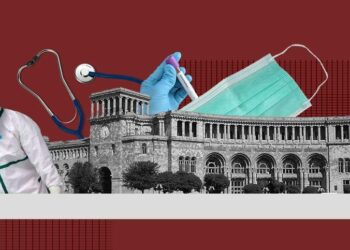
The experience of combating the coronavirus pandemic in Armenia can and should serve as an important foundation to develop long-term and institutionalized mechanisms of crisis management with the support of Diasporan experts and professionals.

Toxic masculinity is not only an attack on femininity, it is also an attack on manliness, on the cultural precepts of Armenian society and it is an assault of ontological proportions, writes Nerses Kopalyan.

EVN Report’s mission is to empower Armenia, inspire the diaspora and inform the world through sound, credible and fact-based reporting and commentary. Our goal is to increase public trust in the media. EVN Report is the media arm of EVN News Foundation registered in the Republic of Armenia in 2017.