
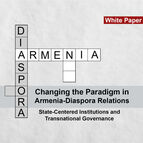
Changing the Paradigm in Armenia-Diaspora Relations
How should Armenia-Diaspora relations develop moving forward? This new White Paper argues that relations must be defined through state-centered institutions and transnational governance.

How should Armenia-Diaspora relations develop moving forward? This new White Paper argues that relations must be defined through state-centered institutions and transnational governance.

The International Republican Institute recently published its fourth public opinion survey since the Velvet Revolution. The survey found that a healthy majority of Armenians believe the country is heading in the right direction.

If we are to develop and build a functional relationship between the Homeland and the Armenian Diaspora, we need to understand the discrepancy between the Diaspora’s devotion to Armenianness and the Republic of Armenia’s vision for the Armenian world.

Can the popularity of the National Security Service be sustained after the dismissal of Artur Vanetsyan? It can, but only through one mechanism: rigid institutionalization and the complete alleviation of the personalization of politics in Armenia.

As an instrument of transitional justice, vetting is designed to “cleanse” state institutions that are tainted by systemic corruption, nepotism, and incompetence. Vetting of personnel is the first step toward the broader goal of institutional reform, writes Dr. Nerses Kopalyan.
Should Armenia implement the tools of transitional justice? This White Paper, developed by Dr. Nerses Kopalyan is a comprehensive transitional justice agenda for the Republic of Armenia.

While taking the reader through the complexities of international law, Dr. Nerses Kopalyan writes that when Armenia and Azerbaijan speak about peace, they mean completely different things. What they are actually saying is that they seek peace on their own terms.

When the Ministry of Diaspora was eliminated, many believed it went against the interests of the Armenian Diaspora. Nerses Kopalyan provides an alternative approach that alleviates bureaucratic bloating, enhances legislative efficiency offering the Diaspora a healthy dosage of political capital and a culture of reciprocity.

Dr. Nerses Kopalyan provides an in-depth analysis of the parties and coalition of parties that are running for the Dec. 9 snap parliamentary elections. Of the 11 political forces preparing for the campaign, Kopalyan writes, only six are competitive and have the capacity to influence and effect the policy discourse during the campaign.
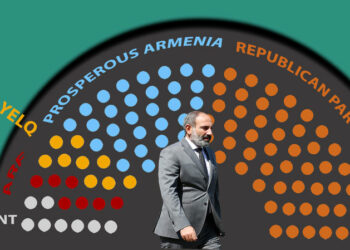
With snap parliamentary elections around the corner and if all indicators hold true, Prime Minister Nikol Pashinyan’s Civic Contract party remains poised to sweep the vote. The question that the prime minister will have to consider is whether he wants to rule or govern.

EVN Report’s mission is to empower Armenia, inspire the diaspora and inform the world through sound, credible and fact-based reporting and commentary. Our goal is to increase public trust in the media. EVN Report is the media arm of EVN News Foundation registered in the Republic of Armenia in 2017.